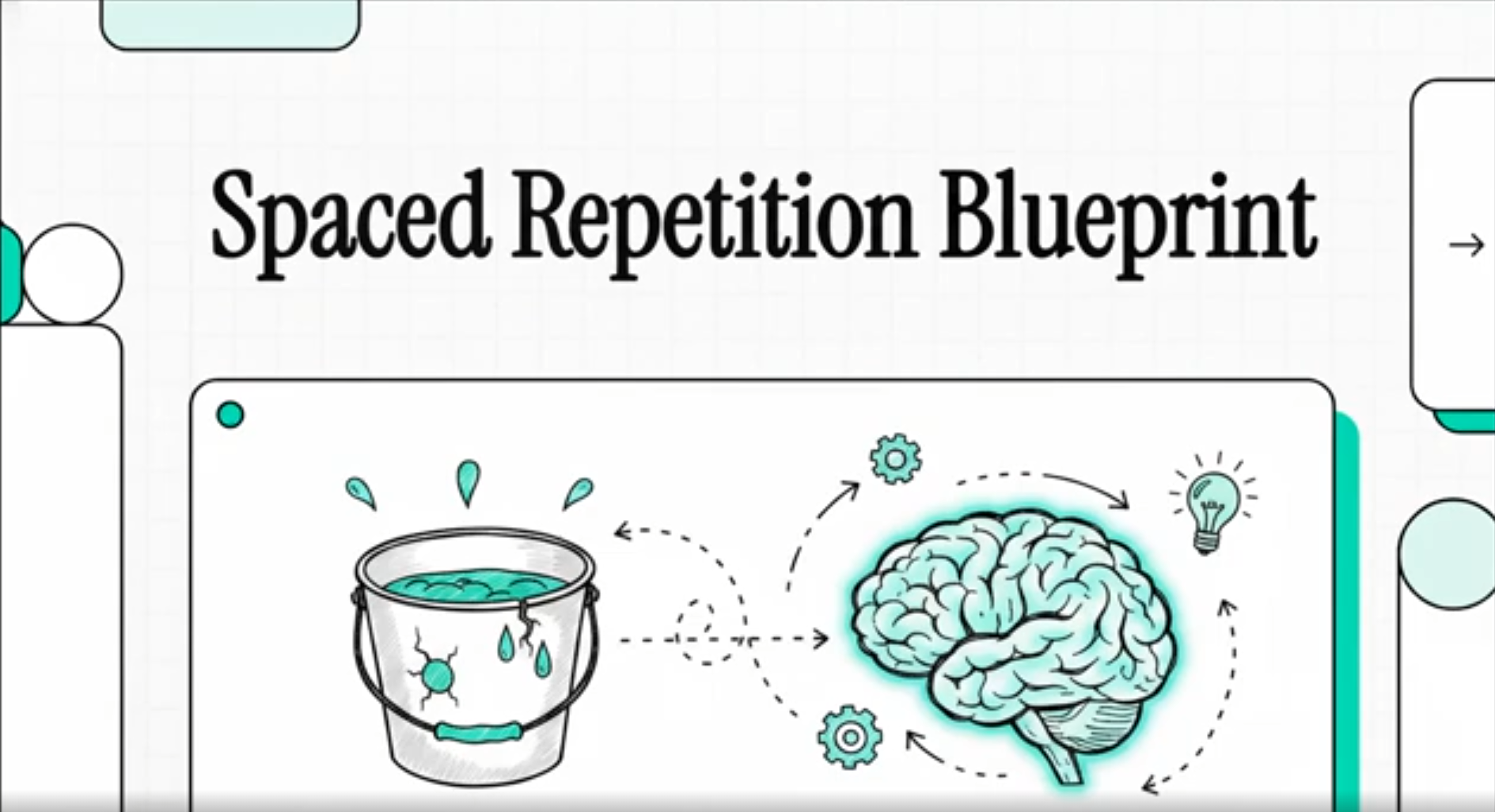
Have you ever crammed for an exam only to forget the information the next day? Or studied a topic for hours on end, only to forget it during the exam? These are both common frustrations among students. The solution is simpler than you are probably thinking. You don’t necessarily need to study more, you just need to study smarter. This is where spaced repetition comes in. In this blog post we will cover what spaced repetition is, why it works, and how to do it. We will also cover the benefits and give an example.
Let’s start with what spaced repetition is. It is a study technique where you review material over gradually increasing intervals of time. So, you start looking at the information every other day, then every few days, then once a week, etc. This way, as soon as you are about to forget it, your brain is forced to actively recall the information. This works with research on forgetting. Hermann Ebbinghaus discovered a now famous curve of forgetfulness. His research explains that if we periodically retrieve information, it will allow us to remember that information for longer. This repeated strengthening of memory will lead you to be more successful than an all night cram session.
There are a lot of benefits of using spaced repetition to study. Since it works based on the forgetfulness curve, it improves long-term memory. This is great for when you have cumulative exams and when information is built on from one semester to the next. This method also allows you to spend less time relearning material. In addition, since you are taking breaks and spreading it out, spaced repetition makes studying more effective. As an added bonus, the repeated recall will increase your confidence before an exam. This and more explains why spaced repetition is better than cramming.
Now that we’ve covered what space repetition is and why it’s beneficial, let’s focus on how to use it. I’ve used spaced repetition for a variety of information. For instance, vocabulary and definitions, facts and concepts, and formulas. You can study these topics with spaced repetition by creating flashcards, prompts, practice quizzes, and even summary notes. As the name suggests, an important part of this method is the spacing. So, be sure to create a review schedule that works. Start off with reviewing a topic often and extend the intervals as your memory improves.
Here are some examples for spaced-repetition. Let’s say that we are learning vocabulary. We can create flashcards. We write the word on one side and the definition on the other. Go through each card until you get the definition and the word correct. Repeat the next day, then in three days, then in 5 days. If you get a word correct each time, put it in a separate pile to review less often. This makes sure that you are reviewing all of the material and you aren’t wasting too much time on information that you have already mastered.
As with most study methods, there are some common mistakes that you should avoid. Don’t wait too long to start. Since the intervals between sessions need to increase, you should start this method far enough in advance of the exam. For instance, if you are preparing for a final exam, you should start at least a month or two ahead of time. You will be tempted to just read the flashcard or other information. You have to ignore the temptation and truly test yourself. It’s just studying, there’s no penalty if you don’t know the information yet. So, take your time and do it properly.
Focus on the difficult material. As mentioned above, once you get a question right repeatedly, move it to another pile so that you can focus on the topics that you are having trouble with.
The last mistake is giving up after missing a review session. Life happens. Sometimes we will miss a day or two of studying. If that happens, just continue where you left off. Don’t stop completely and don’t just cram at the last minute.
Just some final tips for spaced repetition. Keep review sessions short and take breaks. Use the pomodoro technique to balance time and avoid burnout. Be sure to really test yourself instead of just reading the answer. Start slow and build up as you master this study technique. Good luck on your exams!
Leave a Reply