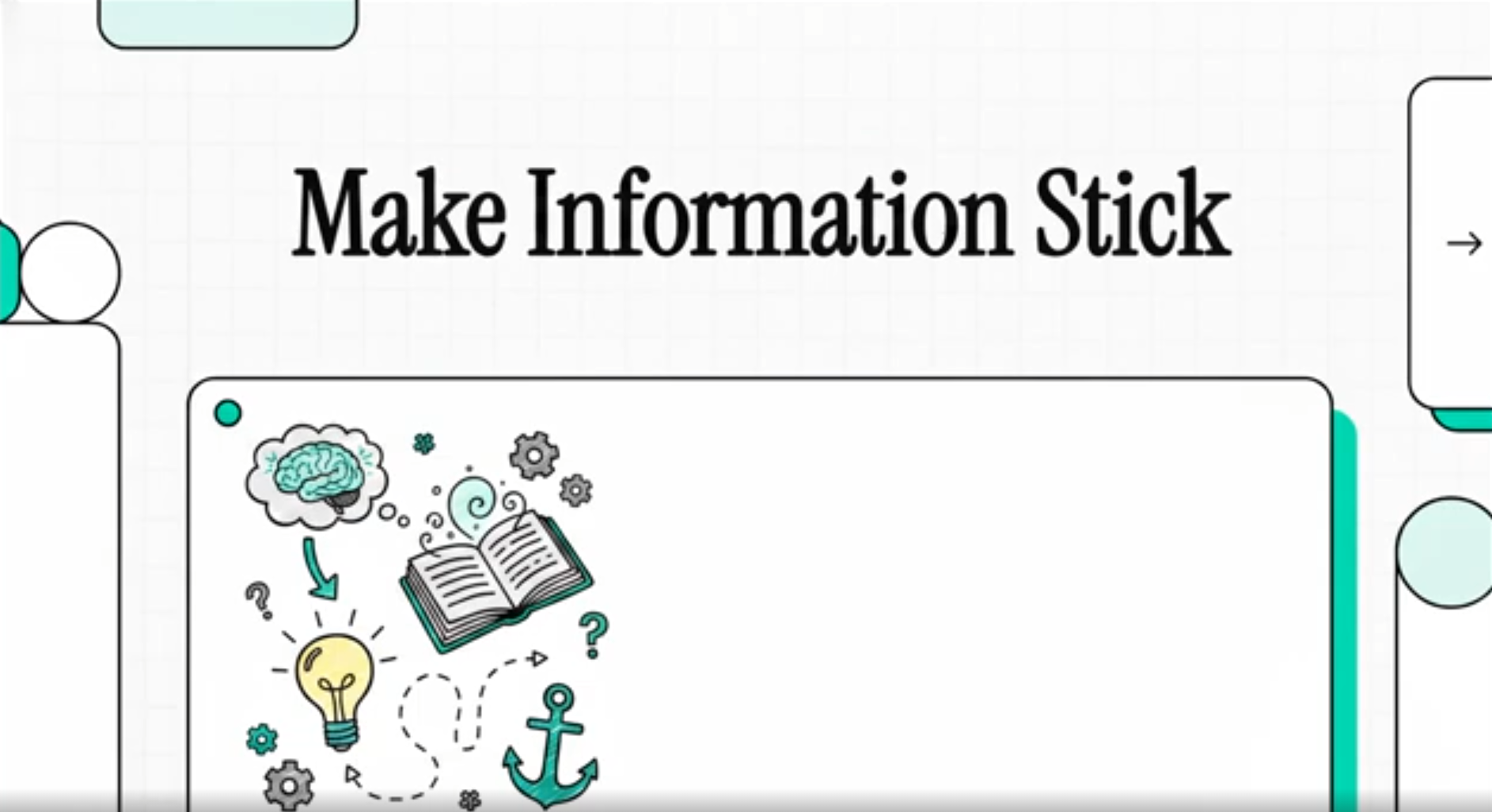
Have you ever heard of the power of why? Some say that it is a major factor in deciding what our brains remember and what they forget. We are wired to forget random facts. However, we love to remember stories and reasons. This is why rote memorization, which is just repeating facts over and over again, doesn’t lead to long term memory. So what can we do to remember new information? One solution is elaborative interrogation.
Have you ever been around a younger sibling or cousin who just kept asking why? Children are naturally curious and this is how they learn. If you don’t want to be compared to a child, then think about detectives, trying to make connections and find out why something is true. Either way, you are practicing elaborative interrogation. You are taking new information and questioning why it is, how it is, or even, why it matters. You answer the question with information that you already know.
Elaborative interrogation is easily defined by its two words. Elaborative means expanding information and you do this by connecting the new information to existing memory. Interrogation is questioning the material, the new information. This works because memory is what sticks and stays with us after a thought. A great way to remember a new fact is to think deeply about its meaning instead of focusing solely on surface-level keywords.
There are three steps to elaborative interrogation.
The first is obviously to identify the fact or concept that you are trying to learn. Look through chapter or lecture notes and just choose one to start with. As an example, use the fact that the human heart has four chambers.
The second step is to ask the why question. To follow our example, why does the human heart have four chambers? You could also ask, why does the heart not just have one chamber.
The third and final step is to answer. This step is where you can connect to existing knowledge or dig in deeper to understand the new topic. Back to our example of the heart, it can’t be a single chamber because it needs to keep oxygen-rich blood and oxygen-poor blood separate. It has four chambers so it can act as a dual pump to efficiently pump blood to the lungs at lower pressure and to the rest of the body with higher pressure.
This works for a few reasons that are backed by cognitive science. First, similar to Feynman Technique, it removes the illusion of competence. Instead of explaining it in simple terms, elaborative interrogation forces you to answer why it is true. If you can’t explain why it is true, then you can find weak spots in your understanding. Second, by elaborating on the topic, you are increasing the encoding of the information into your memory. Think of this as your brain saving information to a hard drive. Since you connected the new information to existing memory, you’ve increased the chances that you can retrieve it later on. Third, this creates a conceptual schema in your mind. It turns an individual trivia fact into a web of logic. This makes it more difficult to forget as compared to an isolated flashcard.
Now that you know about elaborative interrogation, be sure to use it during your next study session. Learning new information shouldn’t be collecting facts like stamps, it should be about building a web of connections.
Leave a Reply